
High-Quality Instructional Practices Overview
High-Quality Instructional Practices Service Selections
Explicit Instruction
(Phase 1: Building Awareness)
Builds a shared foundation for high-quality teaching by making learning targets and success criteria clear. Educators model new skills explicitly, check for understanding, and support all students to meet rigorous expectations.
Strategic Questioning
(Phase 2: Integration & Alignment)
Helps teachers connect evidence-based questioning to standards, routines, and lesson goals. Intentional prompts reveal student thinking, surface misconceptions, and guide real-time instructional decisions.
Student Engagement Strategies
(Phase 2: Integration & Alignment)
Strengthens equitable engagement by aligning participation structures to learning goals. Students are actively involved in meaningful tasks that build agency and ownership of progress.
Differentiated Learning
(Phase 3: Implementation)
Equips educators to adapt instruction to diverse learner needs while staying anchored to clear targets. Teachers plan multiple pathways so every student can access grade-level learning and demonstrate mastery.
Inclusionary Practices
(Phase 3: Implementation)
Centers equity as a design principle, not an add-on. Educators create learning environments where every student belongs, contributes, and has inclusive access to high-quality content.
Small Group Instruction
(Phase 3: Implementation)
Uses flexible grouping to deliver precise support or extension tied to lesson goals. Small-group time is driven by student work and formative evidence to accelerate growth.
Enrichment & Extension
(Phase 3: Implementation)
Provides structured opportunities for students to deepen and apply learning beyond initial instruction. Tasks extend thinking, increase challenge, and nurture curiosity and agency.
Data-Informed Shifts & Feedback
(Phase 4: Monitoring & Refinement)
Builds continuous improvement through observation, student work, formative checks, and feedback loops. Teachers make timely instructional shifts based on evidence and reflect on impact to sustain growth.
Leadership Coaching
(HQIP leadership strand across phases)
Partners with leaders to build the systems, capacity, and culture that sustain HQIP in every classroom. Coaching supports reflective leadership, aligned priorities, and schoolwide instructional improvement.
High-Quality Instructional Practices Resources
High-Quality Instructional Practices Brochure
High-Quality Instructional Practices (HQIP) is a professional learning series that helps schools build and sustain evidence-based instruction through a four-phase model focused on awareness, alignment, implementation, and continuous improvement. By blending teacher-focused strategies with leadership development and coaching, HQIP strengthens classroom practice while building the systems and culture needed for lasting gains in teaching and student outcomes.
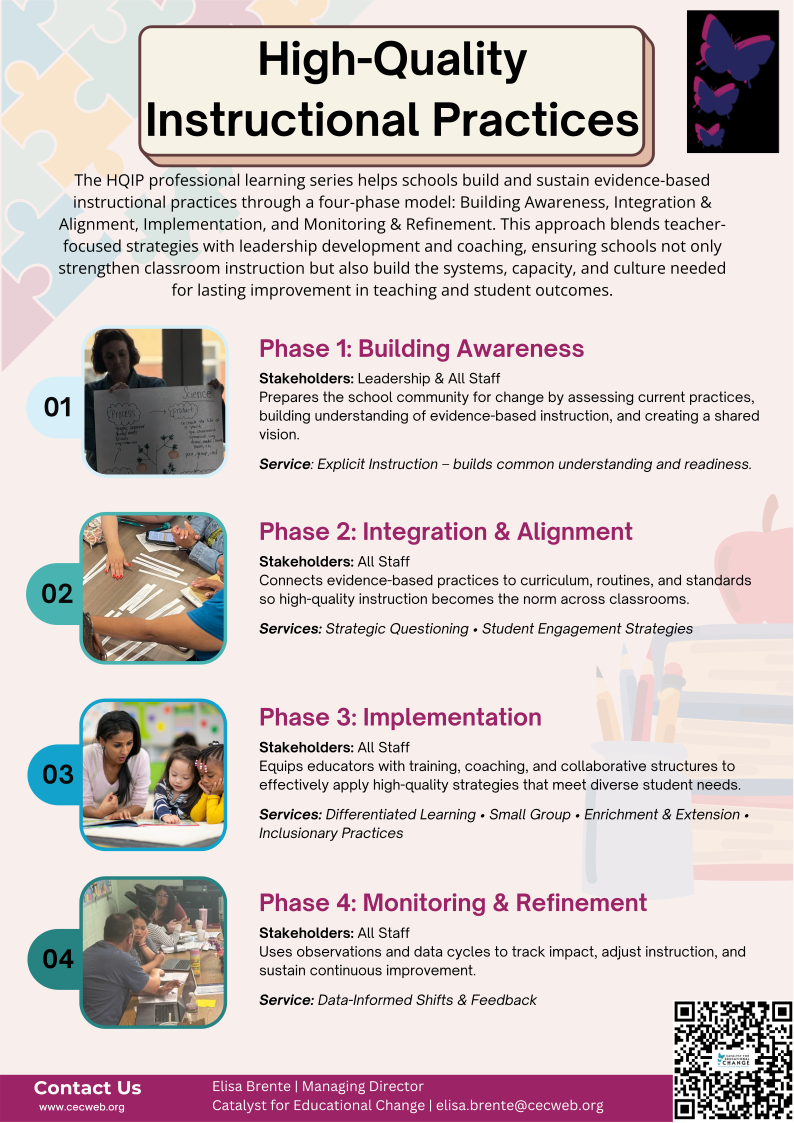
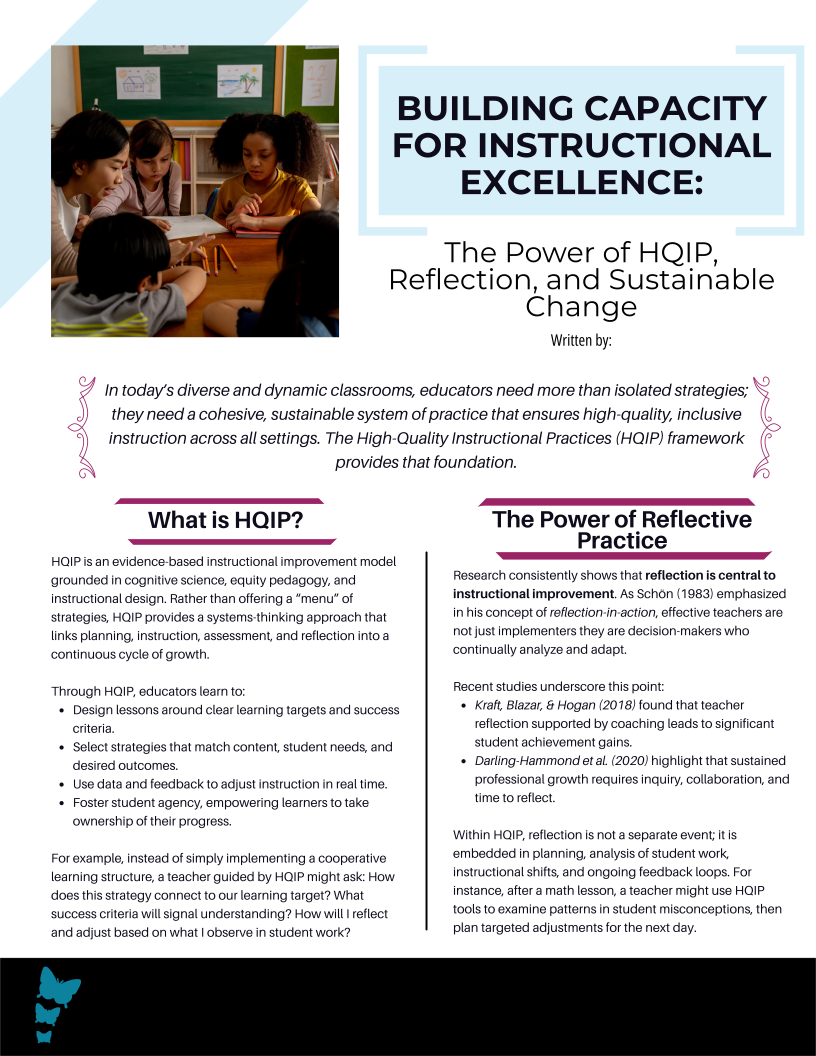
Building Capacity for Instructional Excellence introduces the High-Quality Instructional Practices (HQIP) framework, an evidence-based, systems-focused approach that connects planning, instruction, assessment, and reflection into a continuous cycle of growth. Grounded in learning science, equity, and reflective practice, HQIP empowers educators to make intentional instructional decisions that lead to inclusive, responsive, and sustainable improvements in teaching and student outcomes.
We will help you develop a plan